
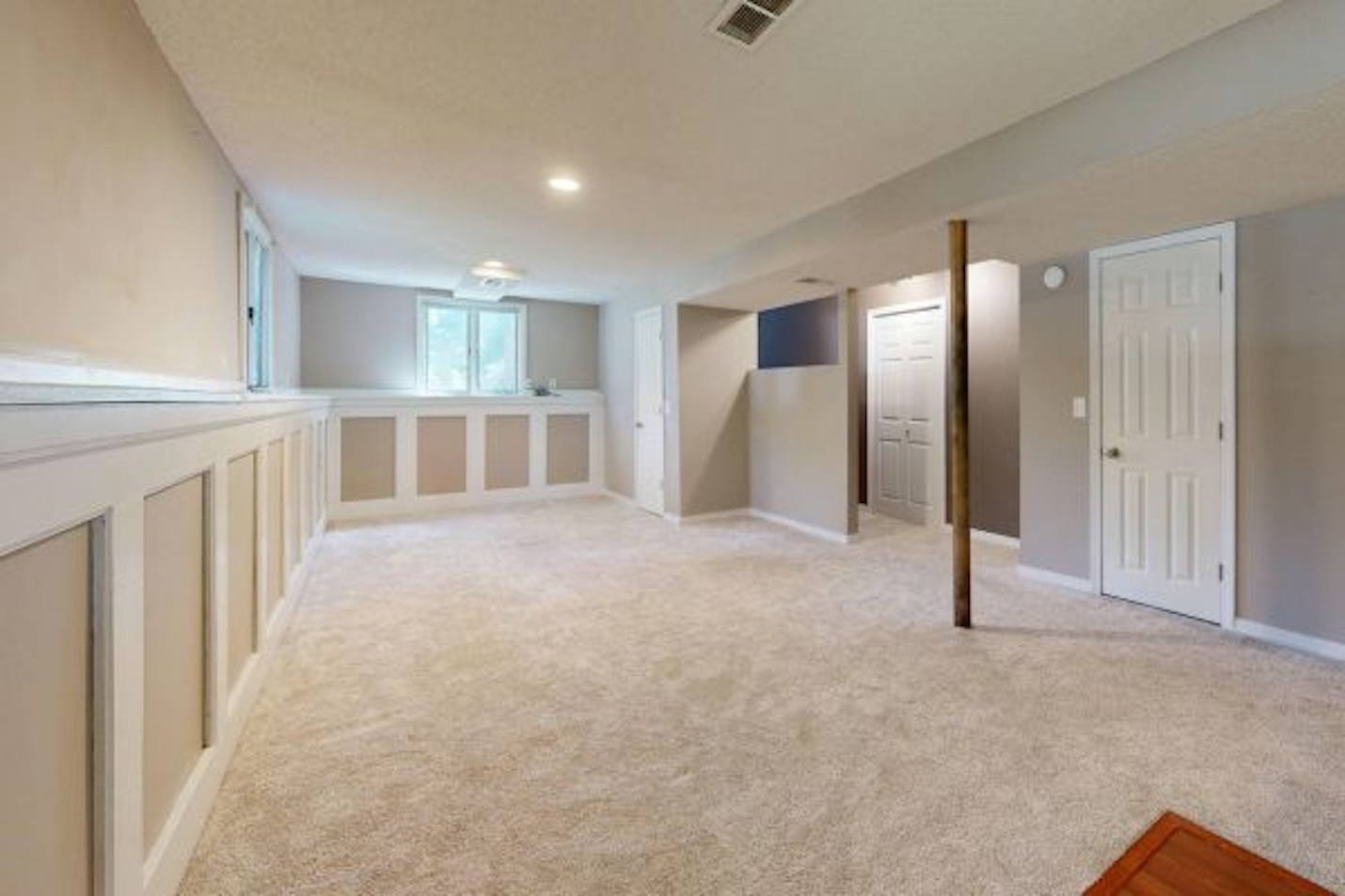
What Is Considered a Finished Basement in Maryland? Finished vs. Partially Finished Explained
In Maryland, a basement that looks finished might not meet the legal or appraisal requirements to be officially classified as such. The difference matters for safety, permits, square footage, and resale value. Understanding what is considered a finished basement helps homeowners decide how far to take a basement project and avoid issues later with inspections, listings, or insurance.
This guide explains how Maryland typically defines finished versus partially finished basements, what code and permit requirements apply, how square footage is treated, and how different finish levels affect value and use.
What Makes a Basement “Finished”?
At a basic level, a finished basement is a space designed for regular, safe occupancy, not just storage or utilities. In Maryland, that usually means the basement meets building code standards, not just cosmetic expectations.
A basement is generally considered finished when it includes:
- Permanent flooring, walls, and a finished ceiling
- Electrical outlets and lighting installed to code
- A permanent heating source connected to the home’s system
- Safe access and required exits
- Proper permits and inspections were required
Heating is one of the most common differentiators. A space without permanent heat is rarely considered finished, even if walls and flooring are installed. Energy planning is crucial here, particularly when basement renovations involve broader efficiency upgrades like improved insulation and HVAC distribution.
Related: Energy-Efficient Home Remodeling in Maryland (Windows, Insulation, HVAC)
What Is a Partially Finished Basement?
A partially finished basement sits between raw storage space and a fully finished living area. These basements often have some finished elements but fall short of full compliance or functionality.
Common examples include:
- Drywall and flooring in part of the basement, with exposed utilities elsewhere
- A finished recreational area without permanent heating
- Spaces with low ceilings or limited access that do not meet code for living areas
Homeowners often choose partial finishes to control cost, preserve utility access, or phase a project over time. Understanding what a partially finished basement is helps set realistic expectations for value and usability.
Finished vs. Partially Finished Basements: Key Differences
| Aspect | Finished Basement | Partially Finished Basement |
|---|---|---|
| Code compliance | Meets residential code | May not meet full code |
| Heating | Permanent heat source | Often missing or limited |
| Egress | Required where applicable | Often absent |
| Square footage | Sometimes counted | Rarely counted |
| Typical ROI | ~65–75% | Lower and variable |
| Common uses | Living areas, offices | Storage, recreation |
This distinction becomes especially important when permits, resale, or insurance are involved.
Do You Need a Permit to Finish a Basement in Maryland?
In most cases, yes. Maryland jurisdictions typically require permits when basement work includes electrical, plumbing, framing, or changes to egress.
Permits are commonly required for:
- Adding or modifying electrical circuits
- Installing plumbing or bathrooms
- Framing new walls
- Adding bedrooms or egress windows
Skipping permits can create problems during resale or inspections. Requirements can vary slightly by county, so it is important to verify local rules early in the planning process.
Egress Window Requirements in Maryland
Egress is one of the most misunderstood parts of basement finishing. Egress window requirements Maryland homeowners must follow are designed primarily for safety, particularly within basement bedrooms.
In general:
- Bedrooms require a compliant egress window or door
- Egress openings must meet minimum size and height standards
- Window wells may be required depending on the grade level
Detailed specifications are outlined in resources such as the Maryland egress requirements guide, which explains dimensions and window well considerations. Even when a basement is not used as a bedroom, egress decisions can influence whether a space is considered fully finished.
Read: Maryland Egress Requirements Guide
Does a Finished Basement Count as Square Footage?
Usually, finished basements do not count toward a home’s above-grade square footage, even when they are fully finished. However, that does not mean they lack value.
Appraisers and listings typically:
- Separate above-grade and below-grade living spaces
- Consider finished basements as an additional livable area
- Adjust value based on finish level, access, and usability
Maryland assessment guidance, including documentation from the Maryland Assessment Procedure Manual, explains how finished basements are treated differently from main-level square footage.
Reference: Maryland Assessment Procedure Manual (Finished Basements)
How Much Value Does a Finished Basement Add?
A well-executed finished basement often delivers a return of roughly 65–75% of the project cost, though results vary based on finish quality, layout, and market conditions.
Factors that influence value include:
- Ceiling height and natural light
- Code compliance and permits
- Flexibility of use
- Overall integration with the home
- Local market conditions
Local markets matter as well. In areas such as Baltimore, basement remodels that create usable living space tend to be more attractive to buyers than partially finished or utility-heavy spaces.
Common Uses That Push a Basement Toward “Finished”
Certain uses almost always require a fully finished approach.
Examples include:
- A dedicated basement home office
- Guest suites or bedrooms
- Media rooms intended for daily use
- Playrooms or family gathering spaces
In communities such as Upper Marlboro, homeowners we’ve worked with often choose full basement finishes to support remote work or multi-use living.
When a Fully Finished Basement Makes Sense (and When It Doesn’t)
A fully finished basement is often worth it when:
- The space will be used daily
- Ceiling height and layout support comfortable living
- Long-term resale value is a priority
A partially finished basement may make more sense when:
- The budget is limited
- Utilities require frequent access
- The space is primarily storage or mechanical
Clarifying this decision early avoids overbuilding or under-investing.
Next Steps After You Decide What Level of Finish You Need
Once homeowners understand what constitutes a finished basement and which category best fits their goals, the next step is to plan the scope, permits, and execution. Working with an experienced team familiar with local requirements helps ensure safety, compliance, and long-term value, which is where PurBilt’s basement remodeling services and our remodeling process come into play.
Explore: PurBilt Basement Remodeling Services
See: Our Remodeling Process
Plan Your Basement With the Right Definition First
Understanding the difference between finished and partially finished basements helps homeowners make informed decisions before construction begins. If you are planning a basement project and want guidance specific to your home and local requirements, you can schedule a free estimate to discuss options, permits, and next steps with PurBilt.


